Essay · 14 minute read
Who Gets to Tell You Who You Are?
A revised look at self-acceptance, identity, and what happens when someone else's interpretation of you becomes more authoritative than your own experience.
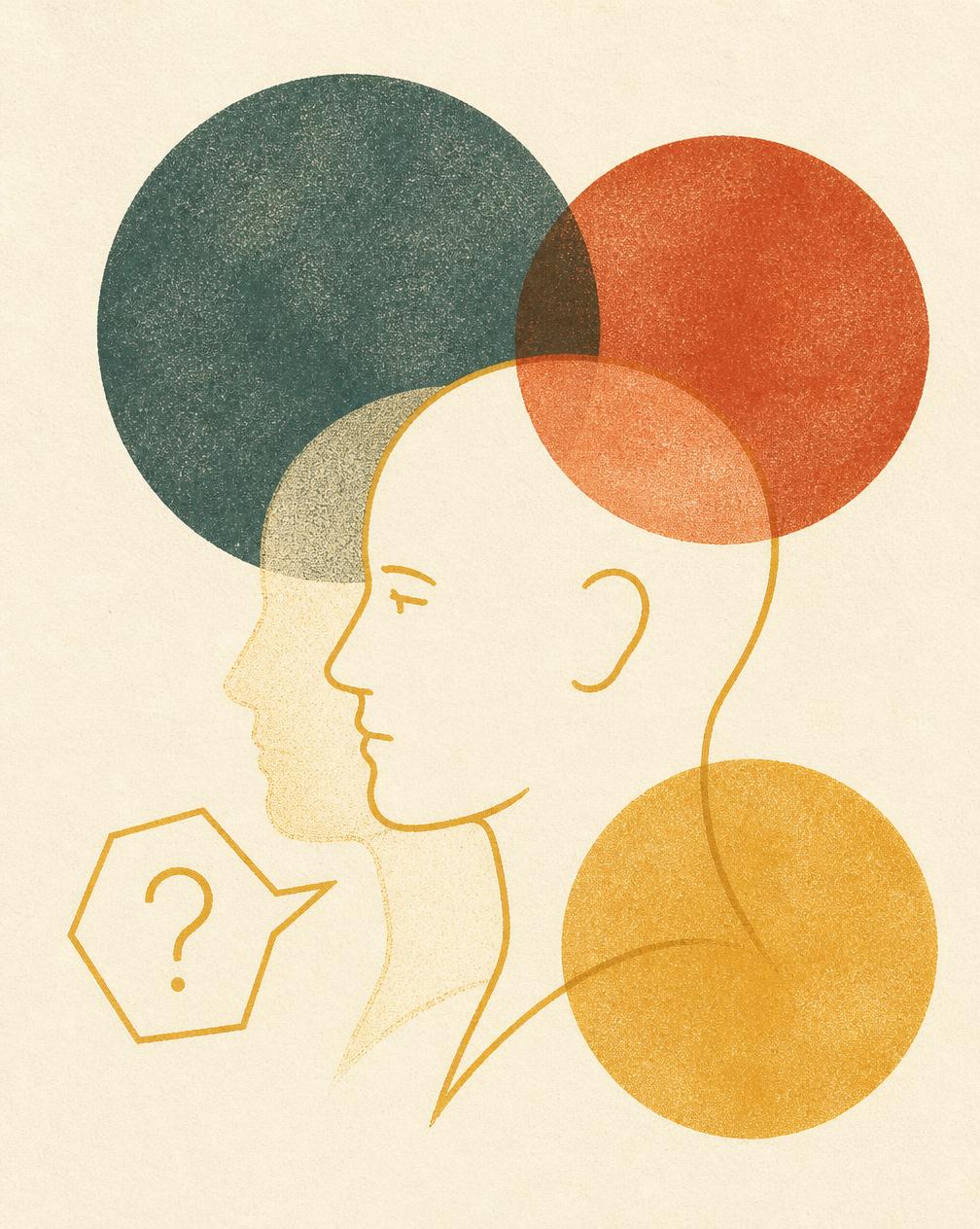
Editorial note: When I wrote this article in 2023, I thought embracing your uniqueness was mostly a matter of giving yourself permission to stop conforming. I told people to own who they were, celebrate their differences, and be "unapologetically you." I've thought about that again. There's a problem with telling someone to embrace who they are when they aren't entirely sure they can trust themselves to know who that is.
I Thought Self-Acceptance Was the Hard Part
The original version of this article contains a lot of enthusiastic encouragement. Your perspective is your superpower. Celebrate your passions. Let go of societal expectations. Share your story. Wear your differences like a badge of honor.
I don't disagree with the impulse behind most of that. I still think authenticity matters enormously. I still think there are parts of ourselves we suppress for no better reason than that somebody else decided they were weird, inappropriate, immature, excessive, or otherwise outside the standard. I'm much less interested now in changing harmless parts of myself to make other people comfortable.
But the original article assumed something I didn't notice at the time: before you can confidently embrace yourself, you have to trust your own understanding of yourself. That isn't always easy, particularly when someone else seems to understand the territory better than you do.
Apparently I Wasn't Queer Enough to Be Bisexual
I moved to Houston in 1999, and not long afterward I met someone through a coworker who presented female at the time and later identified as non-binary. She was Queer As Fuck. At our first meeting, she asked me if I wanted to "come out to play."
I had absolutely no idea what she meant. I also didn't have the communication skills to just fucking ask, so I didn't.
A few years went by, and we became friends through LiveJournal, which probably dates me more effectively than anything else I could put in this article. As I had children and came into myself as a mother, we became closer. Eventually, she became one of my best friends.
Our relationship was complicated, though, in part because I regarded her as something of an Expert™ in queerness. She had language and experience I didn't have. I was still figuring out parts of myself that she seemed to understand fluently, so when she told me something about queerness, I gave her conclusions a tremendous amount of authority.
At some point, I told her about experiences I'd had when I was younger. In college, I'd kissed a female friend in public partly because I enjoyed the thrill of the attention it drew from men. She told me, essentially, that this didn't mean I was queer. It meant I was the worst kind of woman: the kind who trotted out bisexuality as a performance for the male gaze.
I believed her.
Two Things Can Be True at the Same Time
Here's the thing: there was something worth examining in what she told me. Performing sexual interaction between women for male attention is a real cultural phenomenon, and I absolutely had enjoyed the attention. I can look back at my younger behavior now and examine that honestly without needing to rewrite it into something nobler than it was.
What I didn't understand then was that we had collapsed two completely different questions into one. Was some of my behavior with women influenced by the male gaze? Yes. Was I actually attracted to women? Also yes. Those things could coexist, and the first answer never logically required the second one to be no.
I didn't understand that distinction at the time. More importantly, I didn't trust my own understanding of queerness enough to challenge hers. She knew this world better than I did, so when the Expert™ told me that my behavior disqualified my attraction, I accepted the verdict. Then I spent about a decade trying to make my actual experience fit it.
Apparently All Those Crushes Were "Admiration"
I continued finding women attractive. My husband and I would ogle women together. I developed what I can now very obviously recognize as crushes on women, but I didn't call them crushes. I called them admiration.
That was a remarkably convenient word because it allowed the experience to exist without requiring me to reconsider the framework I'd been given. I could think a woman was beautiful. I could be fascinated by her. I could desperately want her attention. I could experience all sorts of feelings that, had they been directed toward a man, I would have immediately recognized as attraction. But women? Apparently I just admired them a lot.
The evidence kept accumulating, but I had already been given an interpretation that explained why I wasn't allowed to interpret it the obvious way. That's an incredibly effective way to make someone distrust themselves: don't necessarily deny the experience. Give them a different explanation for what the experience means.
Research on bisexual identity invalidation suggests that this experience is far from unique. Bisexual and other non-monosexual people report being told they're confused, performing for attention, going through a phase, or otherwise incorrectly interpreting their own sexuality. Importantly, that invalidation doesn't come exclusively from heterosexual people. It can come from within LGBTQ+ communities too.
Knowing that now doesn't undo what happened then. It does help me understand why one person's interpretation could become so powerful.
Then a Woman Asked Me Out
About a decade ago, I met the woman who would become my girlfriend. She pursued me hard for more than a year, and I was terrified. The fear wasn't that I didn't want her. The problem was that I did, and I still didn't trust what that meant.
I was afraid I wasn't really queer. I was afraid I would say yes, enter a relationship with a woman, and eventually discover that my friend had been right all along. Most of all, I was afraid I would hurt this woman because she'd taken my attraction seriously when I wasn't sure I was allowed to.
It took a lot of conversation and an impressive amount of persistent flirtation before I finally let myself explore what was happening. Ironically, the tool she eventually used to break through my fear was her boyfriend. She set me up on a date with him, and after he and I became involved, she invited me into bed with them. Somehow, approaching the situation through a relationship with a man made it possible for me to cross a threshold I'd spent years treating as dangerous.
He and I didn't last six months.
She and I are still together a decade later.
Life occasionally has a sense of humor that borders on rude.
Other People Help Us Understand Ourselves
It would be easy to turn this story into a lesson about ignoring what everyone else thinks and trusting yourself above all others, but I don't believe that either. Other people have helped me understand myself in enormously important ways. Sometimes another person has vocabulary for something I've experienced but never named. Sometimes someone notices a pattern in my behavior that I genuinely haven't seen. Communities give us frameworks for understanding experiences that can be incredibly difficult to interpret alone.
Research into what philosophers and social scientists call epistemic injustice gives us useful language for part of the problem. At its simplest, epistemic injustice concerns whose knowledge is treated as credible and who is granted authority to interpret an experience. In LGBTQ+ contexts, researchers have examined what happens when people's accounts of their own identities and experiences are discounted or overridden.
I don't think the solution is to declare ourselves infallible experts on ourselves. I'm perfectly capable of misunderstanding my own motivations. I can rationalize behavior, miss patterns, or tell myself a story that protects me from something I don't want to confront. Sometimes somebody else tells me something uncomfortable about myself and they're fucking right.
But there's a difference between allowing another person to give you information and giving them authority over what that information ultimately means. I didn't know that yet.
Non-Standard Communities Create Standards Too
There's another part of this story that feels especially relevant to Non-Standard Human now. The person who told me I wasn't queer enough wasn't enforcing heterosexual conformity. She was queer herself. I'd found someone who represented an alternative to the standard I'd grown up with, and then I discovered that the alternative had standards too.
That's not particularly surprising when you think about it. Communities develop shared language, norms, expectations, boundaries, and ideas about what authentic membership looks like. Some of that is necessary for a community to mean anything at all. But marginalized communities aren't magically immune to gatekeeping just because they've experienced gatekeeping themselves.
Research on LGBTQ+ communities has documented versions of this "politics of authenticity," where people encounter expectations about whether they're sufficiently representative of an identity or whether they belong within a particular community. Once those expectations become rigid enough, the refuge from one standard can start constructing another.
I think this extends well beyond queerness. You can encounter ideas about whether you're autistic enough, disabled enough, poly enough, traumatized enough, bisexual enough, or otherwise sufficiently representative of whatever category helped you find people who finally seemed to understand you. Sometimes those boundaries serve important purposes. Sometimes they're protecting language from becoming so broad that it stops communicating anything useful. And sometimes they're just another person standing at another gate asking to see your credentials.
Self-Acceptance Isn't Self-Absolution
There's another complication that the 2023 article didn't leave much room for. "Be unapologetically you" sounds wonderful until the thing you're being unapologetic about hurts somebody else.
I don't want authenticity to become a shield against accountability. There are things about myself that I accept and still work to manage. There are impulses I don't act on, communication habits I've changed because of their effect on other people, and parts of myself that require negotiation when they collide with somebody else's equally legitimate needs.
My college behavior is actually a useful example. Accepting that my attraction to women was real doesn't require me to conclude that everything I ever did with that attraction was thoughtful, ethical, or completely untouched by the culture around me. I can acknowledge that I participated in something shaped by the male gaze without using that acknowledgment to invalidate my sexuality.
Self-acceptance doesn't require rewriting every behavior as good. It means I can examine the behavior without putting my entire self on trial. That distinction matters to me much more now than "unapologetically you." I don't want to apologize for existing differently. I absolutely want to be capable of apologizing when something I do causes harm.
Those aren't contradictions.
You Get the Final Draft, Not the Only Draft
Maybe that's how I think about identity now. Other people get to contribute notes. A friend can tell me something she sees. A therapist can give me a framework. A doctor can diagnose a condition. A partner can tell me how my behavior affects them. A community can give me language for an experience I thought was uniquely mine. Research can tell me that something I've experienced fits a pattern other people have experienced too.
Sometimes those contributions will radically change how I understand myself. Sometimes they'll reveal something I couldn't see from inside my own head. Sometimes they'll be wrong. What I don't want to do again is confuse someone else's confidence with authority.
My queer friend knew more about queer culture than I did in 1999. That didn't make her more qualified than I was to know whether I was attracted to women. She could give me information about my behavior. She could challenge me to think about how that behavior interacted with the male gaze. She could tell me how she interpreted it.
She couldn't actually tell me what I felt.
I wish I'd known that there was a difference.
Embrace Your Uniqueness?
I still believe in much of what I was reaching for when I wrote this article in 2023. I want people to have the freedom to dress strangely, love enthusiastically, pursue weird interests, build unconventional relationships, communicate differently, reject pointless expectations, and discover ways of living that fit them better than whatever default they inherited.
But "embrace your uniqueness" sounds much simpler to me now than it did then. Sometimes you have to discover what you've been editing out. Sometimes you have to figure out which criticisms contain useful information and which ones you've internalized as verdicts. Sometimes you have to reconsider the authority you gave someone twenty years ago because they seemed more knowledgeable, confident, experienced, educated, conventional, unconventional, or certain than you were.
And sometimes you have to recognize that you have spent ten years calling a crush "admiration" because somebody else gave you a definition of yourself that reality has been quietly contradicting the entire time.
Other people can help you understand yourself, and I think you should let them. They can challenge your behavior, point out patterns you haven't noticed, and tell you how your choices affect them. Sometimes the things they tell you will be uncomfortable, and sometimes they'll be right. Taking other people's perspectives seriously is part of understanding ourselves, especially when we're trying to distinguish between harmless difference and behavior that actually affects someone else.
But information isn't ownership, and expertise isn't omniscience. Someone else's confidence in their interpretation doesn't automatically make that interpretation more authoritative than your own experience. You can take what someone tells you seriously without handing them permanent control over what it means.
That's why I don't think I would tell anyone to be "unapologetically yourself" anymore. You can question yourself, revise yourself, learn things about yourself that make you uncomfortable, change behaviors that hurt people, admit you were wrong, and occasionally discover that you were wrong about being wrong. None of that makes you less authentic. If anything, continuing to reconsider what you think you know about yourself might be one of the more authentic ways to live.
I certainly haven't stopped doing it. God knows I will think about all of this again.
Maybe that's the thing I actually want to preserve from the original article. Embracing your uniqueness doesn't mean declaring that you've finally discovered the definitive version of yourself and defending it forever. It means retaining enough trust in yourself to keep examining who you are without automatically surrendering that authority to whoever happens to sound more certain.
Other people get to leave comments. They can suggest revisions. Sometimes they'll catch something important that you completely missed.
But you should probably retain editing rights.
Extended Reading
Flanders et al. — Bisexual Identity Invalidation: A Qualitative Investigation
Research examining identity invalidation among bisexual and other non-monosexual people, including experiences of being characterized as confused, attention-seeking, or otherwise incorrectly interpreting their own sexuality. The study is particularly relevant because participants reported invalidation from within LGBTQ+ communities as well as outside them.
Read more →Research on Epistemic Injustice and LGBTQ+ Experiences
This work provides useful context for thinking about whose accounts of identity and lived experience are treated as credible, and what happens when another person's interpretation is granted greater authority than someone's account of their own experience.
Read more →Research on Authenticity, Belonging, and Gatekeeping Within LGBTQ+ Communities
This research examines how marginalized communities can develop internal expectations around authenticity and belonging, including norms that influence who is regarded as a legitimate member of the group.
Read more →