Essay · 18 minute read
I've Been Both Women
What Ted Lasso gets right about bias, blind spots, and being wrong about yourself.
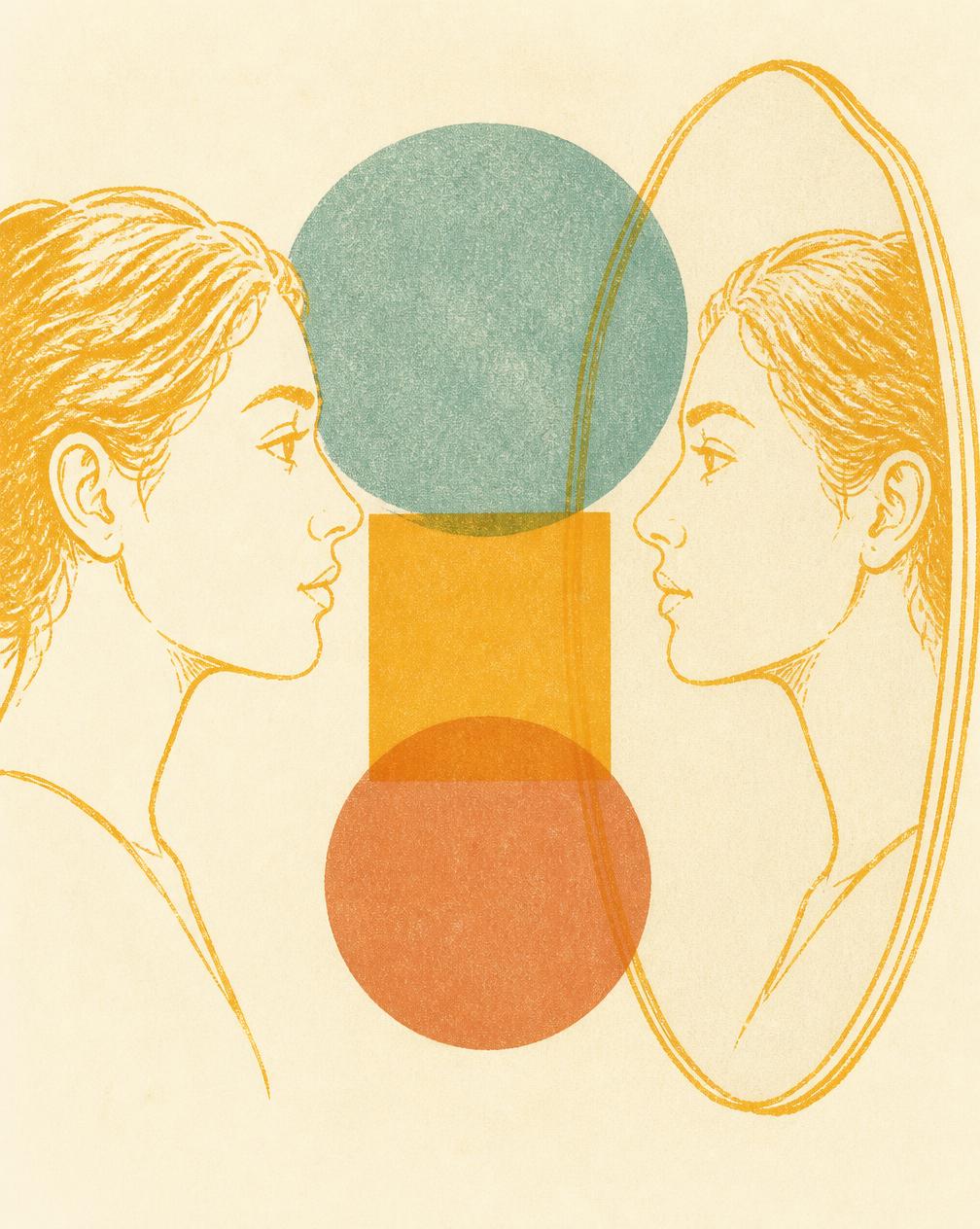
There is a scene early in the new season of Ted Lasso that lodged itself in my brain almost immediately. AFC Richmond is building a women's football team, and Alice Chilton has been working with the players and wanted the head coaching job. Instead, Rebecca brings Ted back to Richmond. Alice walks into Rebecca's office and asks a deceptively simple question: Did you consider me? Rebecca says no. Then Alice asks the question that changes the entire conversation: Did you consider any woman? Again, the answer is no.
Suddenly Rebecca, a woman who very sincerely considers herself a feminist, has a problem. Not because Alice has proved that Rebecca is sexist. She hasn't. Rebecca wasn't necessarily conducting a traditional candidate search, ranking qualified applicants, and deciding a man was inherently better than the women available. She wanted Ted Lasso specifically. She knows him, trusts him, and has firsthand experience with the peculiar kind of leadership he brings to a team. Ted can be an excellent choice, Rebecca can have completely legitimate reasons for wanting him, and Alice can still be entirely justified in asking why the possibility of a woman apparently never entered Rebecca's consideration.
That ambiguity is what makes the scene so good. A simpler show could make Rebecca obviously sexist and Alice obviously right, or reveal some detail that completely exonerates Rebecca and makes Alice's accusation unfair. Instead, Rebecca has to sit with a much more uncomfortable question: What if my conscious values and my unconscious assumptions aren't as perfectly aligned as I thought they were? Research on moral identity gives us reason to believe that this kind of contradiction is particularly uncomfortable. When wrongdoing or criticism threatens people's sense of themselves as moral people, defensiveness tends to increase.
Watching the scene, I felt a little bit of schadenfreude at seeing someone actually ask the question that so many people have to silently wonder about. But I also had enormous empathy for Rebecca, because having someone abruptly hold up a mirror to a possible blind spot is fucking awful.
Mostly, though, I realized something else.
I've been both women.
The Questions You Can't Answer From the Outside
I've been Alice. I've been the person looking at a decision from the outside and wondering which invisible variable mattered. Was I actually less qualified? Was the other person more experienced? Was it seniority? Job title? Office politics? Was it my body? Was it something about how I communicate or present myself? Was it some combination of perfectly legitimate considerations and unconscious assumptions that nobody involved could accurately separate even if I somehow got them into a room and asked?
That uncertainty is one of the maddening features of subtle discrimination. Most of the time nobody hands you the spreadsheet showing how every variable was weighted. You get an outcome, perhaps an explanation, and your own observations of the patterns around you. Pattern recognition isn't proof of causation, but lack of proof doesn't mean there isn't a pattern. You can be left trying to reconstruct a decision-making process you were never allowed to see, knowing both that bias exists and that there may be completely legitimate explanations for what happened to you.
Alice can't look inside Rebecca's head. Neither can the rest of us. She knows that she has relevant experience. She knows that she wanted the job. She knows that a man got it. Most importantly, she discovers that Rebecca didn't consider another woman at all. That is enough information to justify the question, but not enough to definitively answer it. Sometimes asking the question is all you can do.
But I've been Rebecca, too.
I've had someone stop me in my tracks and effectively ask: Have you considered the possibility that what you just did doesn't match the person you believe yourself to be? Those moments are considerably less satisfying when you're the one standing on Rebecca's side of the desk.
I've done a metric shitton of therapy around criticism, rejection sensitivity, emotional regulation, and the tendency for someone's negative judgment of me to arrive in my nervous system with considerably more force than the situation necessarily deserves. The deeper work, though, has not been learning how to prove that other people are wrong about me. It has been learning how to tolerate the possibility that they might be right long enough to actually look.
Because sometimes they are.
We Don't Get Immunity From the Systems That Hurt Us
One of the comforting stories we tell ourselves about bias is that there are people who possess it and people who experience it. The more uncomfortable reality is that those categories overlap all the time. Being a member of a marginalized group does not inoculate us against absorbing the assumptions that marginalize that group.
Women can perpetuate misogyny. Disabled people can internalize and reproduce ableism. Fat people can hold fatphobic beliefs about themselves and other fat people. People of color can reproduce racial hierarchies and colorism against other people of color. Research documents internalized ableism among disabled people themselves, and psychological research has likewise examined internalized misogyny among women and colorism within racialized communities.
We aren't standing outside these systems simply because they hurt us. We grew up inside them.
That matters because it dismantles one of our easiest defenses against examining our own behavior. I'm a woman, so obviously that decision couldn't have been sexist. I'm disabled, so I can't be ableist. I know what discrimination feels like, so I would recognize it if I were doing it to somebody else. Identity can give us valuable insight into a system, but it doesn't confer immunity from cultural conditioning.
Rebecca's feminism doesn't have to be fake for Alice's question to reveal something important. In fact, I think the scene is much more interesting if Rebecca's feminism is entirely sincere. She can genuinely believe women deserve equal opportunities, genuinely care about women's football, genuinely support women in positions of power, and still have needed a woman standing in her office to make her notice that when she imagined the person who should lead this particular team, she only imagined Ted.
That isn't proof of some secret misogynistic core hiding underneath Rebecca's progressive values. It is evidence that values are not vaccines.
Being Wrong Without Becoming Wrong
I think this is where conversations about bias so often fall apart. Someone points out a potentially sexist decision, and the person who made it hears, You are sexist. Someone identifies something ableist and the listener hears, You are an ableist person. Someone points out racism and the conversation immediately becomes a referendum on whether the accused person is A Racist.
Once that happens, we're no longer just examining behavior. We're defending identity.
Research on wrongdoing and moral identity helps explain why that distinction matters. When people experience wrongdoing as a threat to their moral or social identity, they become more defensive. Researchers have also found that reducing that identity threat can make people more willing to engage with the moral implications of what happened and consider repair.
If my internal equation is I am a good person, therefore I make good decisions, evidence that I made a bad decision threatens the entire structure. I have a powerful incentive to explain the evidence away. But I can build a much sturdier identity around something else: I am a person trying to live according to my values, and sometimes I will fail to do that.
I can be feminist and make a sexist assumption. I can be disabled and behave ableistically. I can be knowledgeable and be confidently fucking wrong. I can be empathetic and hurt someone. I can be an outstanding parent and still make a parenting decision I later regret. None of those contradictions automatically erase everything else I know about myself.
That distinction has become enormously important to me because it allows criticism to become information instead of an existential emergency. I don't have to decide immediately that the other person is wrong in order to preserve myself. I also don't have to collapse into Oh God, you're right, I'm terrible to escape the uncertainty. I can reopen the case.
A Reality Check Is Not a Verdict
Being willing to examine yourself doesn't mean believing every accusation made against you. This is especially important for me because someone else's disapproval can produce the feeling that I've done something wrong long before I have actually determined whether I did something wrong. I've had to learn to separate two questions that my nervous system would sometimes prefer to answer simultaneously: Oh fuck, someone thinks I did something bad and Did I actually do something bad?
The first and easiest intervention is remarkably unphilosophical: take my fucking medicine on time. I am considerably better at complex emotional processing when I'm using my prescribed store-bought neurotransmitters than when I'm attempting to navigate without enough of them. But medication doesn't do the rest of the work for me. What years of practice have taught me is how to make space for the reaction without giving it permission to blow up my life.
I let myself feel whatever I'm going to feel. I breathe through it. I let the reaction expand for a while instead of desperately trying to squash it, because eventually it contracts again. How much it contracts tells me something. Sometimes giving it that space is enough and I realize that the intensity belonged mostly to the initial activation. Other times the emotion gets smaller but leaves something hard behind: No, actually, this still bothers me. That is when I know there is something worth examining.
Sometimes the reaction arrives at an inconvenient time, and one of the most liberating skills I've learned is that I don't necessarily have to resolve it immediately. I can table it until I have enough space to hold it, look at it, and turn it over in my hands. I can examine it from different angles, find the parts that need smoothing, discard the pieces that don't belong, and make room for the real answer. I've learned how to pick my battles, but perhaps more importantly, I've learned how to pick when to battle.
I get to act instead of react.
HALT is another tool I use for exactly this reason. Hungry. Anxious. Lonely. Tired. When something has activated me, I ask whether any of those things are coming along for the ride, because sometimes the criticism that hurt legitimately is also carrying four other passengers through my nervous system. If I'm hungry, I eat. If I'm anxious, I breathe, use somatic exercises, or take appropriate medication if I need it. If I'm lonely, I call someone or ask for a hug. If I'm tired, sometimes the most sophisticated intervention available is taking a nap or unplugging my brain and watching something stupid.
Once the original problem isn't carrying all those other passengers, I can see it much more clearly. That is one of the things I think we miss when we talk about emotional regulation as though its primary purpose is behaving nicely. Emotional regulation has given me something much more valuable than the ability to look calm while I'm upset.
It has given me more freedom to determine what I actually believe.
Looking Again Doesn't Mean Changing Your Mind
Years ago, another parent became furious with me over a decision involving our teenagers. My daughter's girlfriend was 17, and her mother sent me a friend request on a social media profile where I was openly myself about aspects of my life that I knew her mother might judge harshly. From conversations with the girl, I knew that exposing those things could create problems for her, so I asked her what she wanted me to do.
I didn't particularly care whether I accepted her mother's friend request. What I cared about was not making this kid's life harder because of me. I told her that she knew her mother better than I did and asked whether she thought her mother could handle authentic me or whether she would prefer that I keep that profile away from her. She told me to block her mother, so I did.
When her mother eventually learned what had happened, she was pissed as fuck that I had asked her daughter at all. From her perspective, she was the parent. She should have been the one deciding what her child encountered and how those relationships were handled.
Being challenged made me evaluate my reasoning all over again. I considered whether I had crossed a boundary, whether I had put the teenager in an inappropriate position, and whether my own unconventional ideas about parenting and adolescent autonomy had blinded me to something legitimate in her mother's objection. After turning it over for a while, I decided I would change exactly one thing: I probably would have left the friend request unanswered instead of blocking her, because plausible deniability would have been strategically preferable.
I still stand by the underlying decision. My relationship in that situation was with the young woman dating my daughter, and my choices had the potential to create consequences in her life. I believed then, and still believe now, that a 17-year-old deserves meaningful agency in deciding how those consequences reach her.
The other mother's certainty that I was wrong did not obligate me to agree with her. It obligated me to look.
A reality check doesn't have to prove us wrong to teach us something.
And Sometimes They're Right
Of course, sometimes I do all of that work and arrive at a much less comfortable conclusion: Fuck. They're right.
My answer to that has become amazingly simple, although simple does not mean easy. I own it. I'm willing to admit when I was wrong. If I caused harm, I try to make amends. If something can be repaired, I repair it. If it can't, I accept that I may have to live with sadness, guilt, discomfort, or consequences that I cannot make disappear.
That last part is important because accountability is not supposed to guarantee emotional relief. Sometimes you did something shitty and now you feel shitty about it. That feeling is not automatically evidence that another problem has arisen. Sometimes guilt is information. Sometimes sadness is the entirely appropriate consequence of realizing that your behavior did not match your values.
There is a particularly ugly reversal that can happen when we refuse to tolerate that discomfort. I hurt you. You tell me I hurt you. Now I feel horrible about myself, so my feelings become the most urgent problem in the room. Before long, the person I hurt is reassuring me that I'm not terrible, minimizing what happened, apologizing for upsetting me, or otherwise helping me restore the self-image that their pain disrupted.
The person who was owed accountability has just been reassigned as the emotional caretaker of the person who harmed them.
Research on DARVO, which stands for deny, attack, and reverse victim and offender, describes one particularly explicit version of responsibility reversal. Experimental research suggests DARVO can change how observers perceive both parties, reducing perceived responsibility for the person accused of wrongdoing while damaging perceptions of the person reporting harm. That does not mean every shame spiral, defensive response, or request for reassurance is DARVO, nor does every bad reaction establish an abusive relationship. Context, power, severity, coercion, and patterns matter.
But I think more of us need to become comfortable with an uncomfortable fact: people can engage in abusive or manipulative behaviors without sitting down and deciding, I'm going to be an abusive little shit today and gaslight someone into assuaging my feelings of guilt.
Intent does not magically determine impact. Trauma can explain behavior. Neurodivergence can explain behavior. Panic, shame, fear, rejection sensitivity, and a lifetime of shitty coping mechanisms can explain behavior. Explanations matter because understanding why we do something helps us change it. They do not automatically become exonerations.
If I make my distress about hurting you so overwhelming that you have to abandon your own pain to take care of mine, I haven't repaired the original harm. I've given you another burden.
Alice Does Not Owe Rebecca Reassurance
This is where I keep returning to Alice and Rebecca.
Imagine how differently that scene would land if Rebecca fell apart after Alice's questions and Alice immediately began reassuring her. No, Rebecca, of course you're a feminist. You've done so much for women. I know you didn't mean it that way. I'm sorry I made you feel bad.
Alice would suddenly be managing Rebecca's crisis of conscience because she dared to raise a legitimate concern about a decision that directly affected her. Rebecca's discomfort would become Alice's responsibility.
It isn't.
Rebecca gets to feel uncomfortable. She gets to question herself. She gets to examine her reasoning and discover a blind spot, or conclude that her decision was driven by factors Alice could not see, or land somewhere complicated in between. What she does not get to demand is that Alice restore her preferred image of herself.
That is Rebecca's work.
And perhaps that is the part of accountability we avoid when we make being "a good person" into something we have to continually prove. If I need everyone around me to confirm that I am feminist, antiracist, inclusive, compassionate, thoughtful, or good, then criticism becomes dangerous because it threatens something I have outsourced to other people to maintain.
If I can instead accept that these are values I am continually trying to practice, criticism becomes something else. It may still hurt. It may be unfair. It may reveal something I need to change. But it does not have to annihilate me.
I'll Be Both Women Again
I don't think there is some sufficiently enlightened version of myself waiting at the end of all this work who will never make another biased assumption. I don't believe there are Good People who have successfully removed all their problematic cultural programming and Bad People who simply refuse to do the work. I think there are humans who have been steeping in culture since birth, absorbing assumptions long before we were old enough to interrogate them, and then spending the rest of our lives discovering which ones are still hiding in the walls.
Some of those assumptions contradict values we consciously chose later. Some are still invisible to us. Eventually somebody will point one out. Maybe they'll be right. Maybe they'll be wrong. Maybe they'll be partly right in a way neither of us understands yet.
The goal, for me, is not to become bias-free. It is to become increasingly capable of looking when somebody gives me a reason to.
Being feminist does not mean I will never perpetuate sexism. Being disabled does not mean I will never perpetuate ableism. Belonging to a marginalized community does not remove me from the culture that taught everyone else how to marginalize it. Being thoughtful and intentional does not mean every decision I make will withstand examination.
Being a good person does not mean I will never cause harm.
What I hope it means is that when someone tells me I might have, my identity is sturdy enough to survive the possibility long enough for me to find out.
I've been Alice.
I've been Rebecca.
I'll be both women again.
The important question isn't which one I am.
It's whether, when the moment comes, I'm willing to recognize which woman I am this time.
Extended Reading
The Effects of Moral/Social Identity Threats and Affirmations on Psychological Defensiveness Following Wrongdoing
Michael Wenzel, Lydia Woodyatt, and Ben McLean
Research examining how threats to moral and social identity can produce defensiveness after wrongdoing, and how affirming important values can increase willingness to engage with wrongdoing and repair.
Read more →Implications of Internalised Ableism for the Health and Wellbeing of Disabled Young People
Ásta Jóhannsdóttir, Snaefríður Þóra Egilson, and Freyja Haraldsdóttir
A qualitative examination of internalized ableism among disabled young people and its psychological and social consequences.
Read more →Development and Initial Validation of the Measure of Internalized Misogyny With Cisgender U.S. Women
Melissa M. Ertl and Lydia HaRim Ahn
Research examining internalized misogyny among women, including attitudes toward other women.
Read more →Colorism Among Black Women: A Review of Psychological Research From 2000 to 2023
Martinque K. Jones and colleagues
A review of psychological research examining colorism and skin-tone hierarchies among Black women.
Read more →